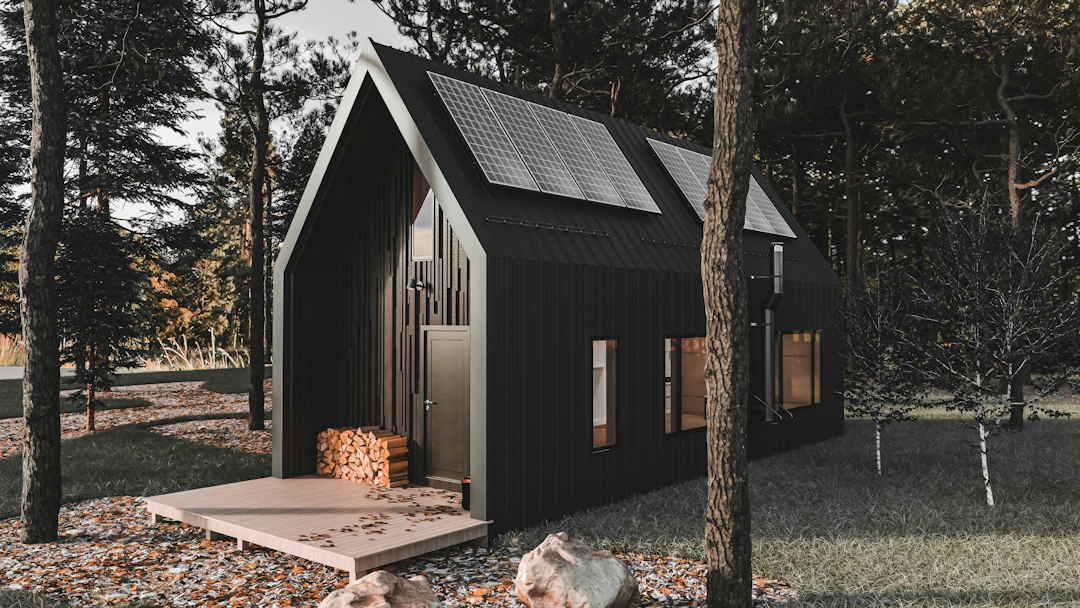
Introduction to Off-Grid Tiny House Automation for Artisanal Woodworkers
Balancing the raw, tactile nature of artisanal woodworking with the hyper-modern precision of off-grid automation might sound like a paradox. Yet, for woodworkers scattered across the Canadian shield, the British Columbia Gulf Islands, or rural Nova Scotia, combining a compact living space with a functional studio is a necessity. Off-grid tiny house automation for artisanal woodworkers isn't just about turning on lights with your phone; it is about survival, power budgeting, and safeguarding expensive machinery against the volatile Canadian climate.
When you draw power from a standalone photovoltaic array and lithium-iron-phosphate (LiFePO4) battery bank, every watt counts. Running a 15-amp table saw or a dust extractor requires strategic load management. By leveraging automation, smart relays, and programmable logic controllers (PLCs), you can seamlessly bridge the gap between wilderness living and fine craftsmanship. This guide explores the advanced strategies, pro secrets, and insider techniques required to build a bulletproof, automated off-grid tiny home and woodshop tailored to Canadian standards.
Decoding the Canadian Off-Grid Electrical Landscape
Designing an autonomous system in Canada means accounting for severe environmental extremes. Winter temperatures can plunge to -40°C in Northern Ontario or the Prairies, while summer humidity can spike in the Maritimes. Your automation network and power infrastructure must be engineered to withstand these shifts.
CSA Standards and Local Electrical Code Compliance
Even off-grid tiny homes built on wheels (THOWs) or permanent foundations should adhere to the Canadian Electrical Code (CEC) where applicable, specifically regarding low-voltage automation lines and AC distribution panels. Ensure all smart relays, microcontrollers (such as ESP32 or Raspberry Pi units running Home Assistant), and enclosures are CSA-approved or certified by a recognized certification body like cUL or ETL.
Thermal Management in Sub-Zero Conditions
Lithium batteries suffer permanent damage if charged below 0°C. Advanced off-grid automation uses temperature sensors connected to solid-state relays (SSRs) to trigger 12V heating pads around your battery bank before a Victron or Schneider inverter allows the solar charge controllers to push current into the cells. Automating this pre-heating cycle using local node logic ensures your power source stays safe even when you are asleep.
Power Management and Advanced Strategies & Optimization
Woodworking demands high startup currents (surge loads) that can easily trip standard off-grid inverters. To prevent blackouts, your automation framework must act as an intelligent gatekeeper between your living quarters and your workshop.
Dynamic Load Shedding for High-Draw Machinery
When you flip the toggle on a 2-horsepower dust collector or a bandsaw, the surge can overwhelm a 3000W or 5000W inverter. By integrating smart current clamps (like Shelly or Emporia Vue monitors) into your main electrical sub-panel, you can automate priority switching.
- Phase 1 (Idle): The automation server allocates maximum power to domestic tiny home essentials (refrigeration, LED lighting, Wi-Fi mesh).
- Phase 2 (Pre-Startup): When you engage your dust collection circuit, a smart current sensor detects the draw and instantly signals low-priority inductive loads—such as water heaters or auxiliary space heaters—to shut off via Zigbee or Z-Wave smart contactors.
- Phase 3 (Operation): The inverter safely delivers clean sine-wave power directly to your woodworking tools without dropping voltage below operational thresholds.
Comparing Power Management Automation Protocols
| Protocol | Range & Reliability | Interference Resistance | Best Woodshop Application |
|---|---|---|---|
| Zigbee 3.0 | Excellent (Mesh network) | High (operates on 2.4 GHz, but uses robust mesh) | Wireless temperature sensors, dust collection blast gate actuators. |
| Z-Wave Long Range | Superior (up to 800m line of sight) | Very High (908 MHz band avoids Wi-Fi congestion) | Main sub-panel circuit monitoring and heavy-duty contactors. |
| Hardwired RS-485 / Modbus | Maximum (wired reliability) | Absolute Immunity to RF noise | Inverter communication, battery management system (BMS) data routing. |
Pro Secrets and Insider Techniques for Off-Grid Tiny House Automation for Artisanal Woodworkers
Achieving peak efficiency in an off-grid maker space requires moving beyond off-the-shelf smart home gadgets. Here are proven tactics used by professional off-grid artisans to streamline their workflows.
Automated Dust Collection Blast Gates
Dust extraction is mandatory in a tiny shop to prevent fine sawdust from coating your living space or creating a combustible hazard. Manual blast gates are frequently forgotten, leading to poor suction.
- The Pro Setup: Install motorized PVC blast gates connected to microswitches on each woodworking tool (table saw, planer, lathe). When you turn on a tool, the current sensor triggers an Arduino or ESP32 board to open the specific blast gate and simultaneously fire up the central dust collector via a heavy-duty 30A relay.
Environmental Humidity Control for Wood Stability
Wood movement ruins joinery. In Canadian climates, relative humidity (RH) swings wildly between humid summers (80% RH) and bone-dry winter heating seasons (20% RH).
- The Pro Setup: Deploy industrial-grade capacitive soil and air humidity sensors throughout your lumber storage racks and workbench areas. Program your automation hub to trigger an energy-efficient dehumidifier or a fresh-air heat recovery ventilator (HRV) whenever RH moves outside the optimal 40%–55% window, protecting your kiln-dried domestic hardwoods (like hard maple, walnut, and yellow birch) from cupping and warping.
Solar Array Optimization and Seasonal Tilt Tracking
In regions like Alberta or Saskatchewan, you receive incredible solar irradiance in June, but short, overcast days in December. Relying on fixed-tilt solar arrays severely limits your winter woodworking hours.
Automated Seasonal Tilt and Snow Shedding
Implement linear actuators on your exterior solar ground mount or heavy-duty roof rack. Using an automated script based on your GPS coordinates and date, the system adjusts the panel tilt angle monthly to maximize photon capture. Furthermore, integrate a heating trace wire behind the panels connected to an automated weather station override; when heavy wet snow blankets your array, a quick burst of DC heat slides the snow off, restoring charging capacity instantly.
Automated Generator Autostart Integration
Even with massive battery banks, extended cloudy periods in late autumn will drain your reserves. Configure your multi-plus inverter/charger to send a dry-contact signal to an automatic propane or diesel generator when your battery state-of-charge drops to 35%. The generator runs for a rapid bulk-charging phase, then shuts down automatically once the batteries hit 85%, saving fuel and ensuring you never lose progress on a glue-up.
Integrating Smart Safety Interlocks for Solo Off-Grid Makers
Working alone in an off-grid tiny house workshop carries inherent safety risks. If an accident happens miles from the nearest neighbour, automation can be a lifesaver.
Dead-Man Switches and Emergency Shutoffs
- Visual and Auditory Alarms: If your dust collector runs continuously for more than 45 minutes without user input, or if carbon monoxide (CO) and propane detectors register anomalies, the automation system cuts power to all high-voltage workshop outlets.
- Smart Lighting Cues: Program your LED shop lights to flash a warning colour (e.g., pulsing amber) when your solar battery bank approaches critical low thresholds (20% SoC), giving you ample time to safely finish your current cut, clean your tools, and shut down before a total system brownout occurs.